

I never thought a museum trip with my kids would end my law career.
How a mum of three ended up building the filter washing-machine makers wouldn't.
A few years ago I was a corporate lawyer in Ljubljana. Then I took my three kids to a photo exhibition about ocean litter.
One fact stopped me cold: about 35% of the primary microplastics in our oceans come from washing synthetic clothes.
Not straws. Not bottles. Our laundry.

Fleece. Leggings. Gym kit. The clothes in my own laundry basket. Every wash can release hundreds of thousands of tiny plastic fibres. They're too small for treatment plants to catch, so they end up in rivers, the sea, and back in our food.
I couldn't un-know it. So we started where a filter would do the most good: inside the machine. We developed a built-in filter that washing-machine makers could fit into new models with very little change to their designs.
We took it to the manufacturers. None of them were interested.
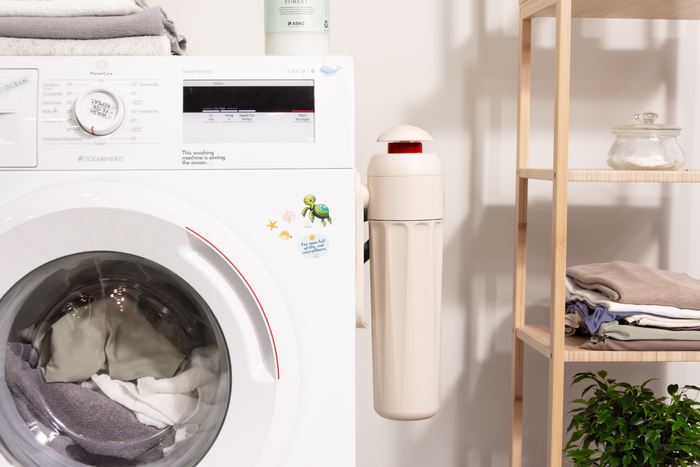
So we designed a filter that doesn't need them: a retrofit filter that fits onto the washing machine you already own.
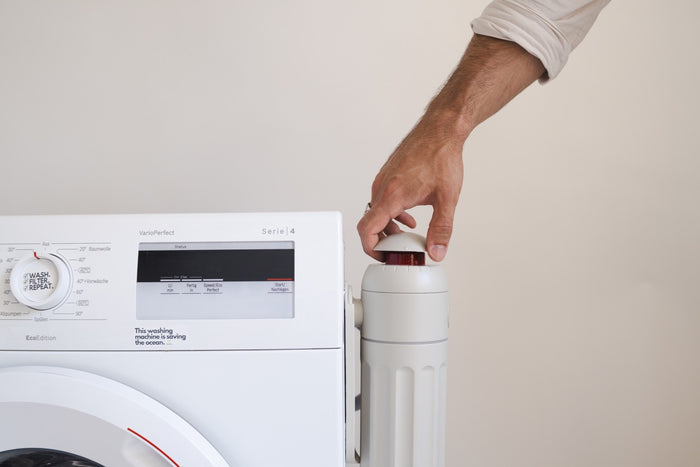
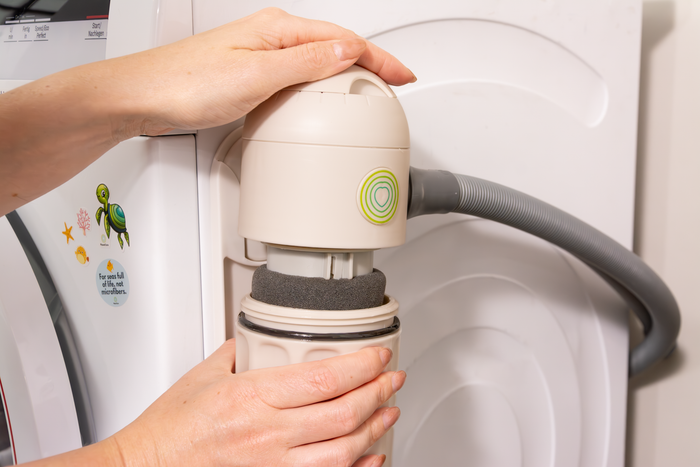
The PlanetCare filter clips onto the drain hose of the machine you already own. No plumber, no electricity, about 10 minutes. It catches up to 98% of the fibres, and when a cartridge is full you post it back to us for free so we can recycle it.
Today more than 10,000 homes use it.
Independent test
- The Politecnico di Torino tested three washing-machine microfibre filters.
- PlanetCare held back the most fibres of the three.
- Our own lab results: up to 98% of microfibres caught.