

Scientists tested three washing-machine filters side by side. One caught the most microfibers.
A peer-reviewed study from Politecnico di Torino compared how much each filter catches and how well it keeps working. Here's what it found.
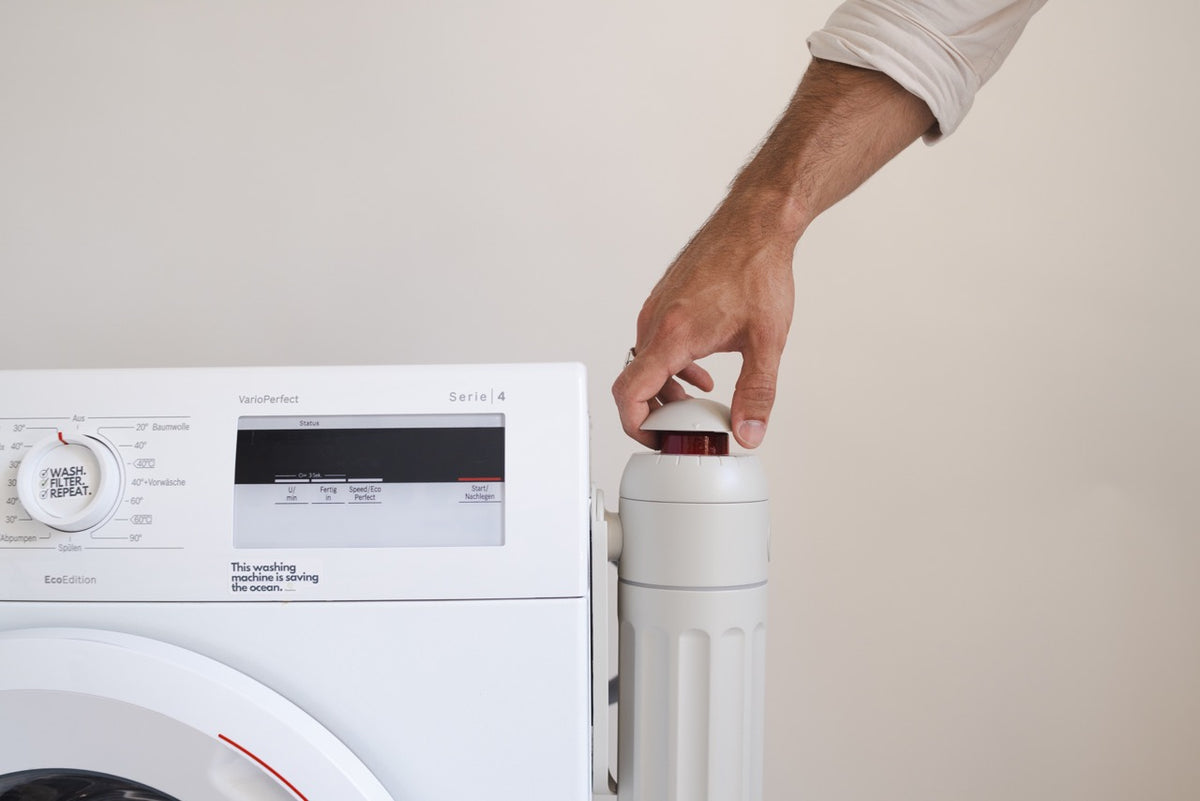
Every time synthetic clothes go through the wash, they shed microfibers: tiny plastic threads that wastewater treatment can't fully catch. A single 6 kg load of acrylic clothing can release more than 700,000 of them.
In a study published in the Journal of Hazardous Materials in 2025, researchers at Politecnico di Torino ran three commercially available washing-machine filters through the same series of washes. They measured how much fibre each filter held back, how much it slowed the water and how quickly it clogged.
Key findings
- Most fibres caught. PlanetCare retained most of microfibers by mass, compared with the other two filters.
- Lowest pressure drop. It slowed the washing machine's drain flow the least of the three.
- Barely clogged. After 10 washes its flow performance dropped by about 8%, against about 37% for the filter that clogged most.
Regulators are starting to act. France's anti-waste law points toward microfiber filters in new washing machines, and the EU is looking at similar measures. None of that changes the machine already in your home.

PlanetCare 2.0 Starter Kit
Fits the washing machine you already have. From €96, with free cartridge returns.


